
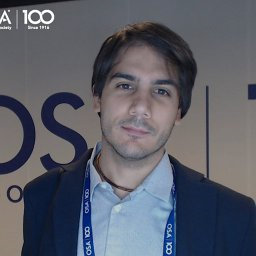

Biagio Mandracchia
| AREA | RESEARCH GROUP | |
|---|---|---|
| Signal Theory and Communications | Signal Theory and Communications Image Processing Laboratory (LPI) |
I am a Ramón y Cajal researcher at the University of Valladolid, attached to the Signal Theory and Communications area and the Image Processing Laboratory (LPI), where I carry out my scientific work focused on the processing and enhancement of optical images for biomedical and scientific applications.
My career began with a solid background in physics, followed by postdoctoral stays at leading international centers such as the CNR (Italy), Georgia Institute of Technology (USA), Complutense University of Madrid, and Carlos III Health Institute. Over the years, I have developed extensive experience in advanced optical imaging techniques, including fluorescence microscopy, digital holography, and quantitative image analysis methods. I am particularly interested in how physical data acquisition and optical system models can be integrated with computational tools to obtain high-fidelity, high-resolution images.
I have contributed to more than 90 publications in high-impact international journals and conferences, focusing on image enhancement and microscopy applications for biomedicine, and have participated in projects that merge optics, signal processing, and machine learning to solve real problems in scientific imaging.
My career is characterized by an interdisciplinary approach, combining signal theories, advanced optics, and computational tools to make complex imaging techniques more accessible, accurate, and robust for the international scientific community.
My research is at the intersection of advanced optics and image processing, with a focus on microscopy and image restoration. The main goal is to extract meaningful biological information from experimental data, overcoming physical limitations and inherent noise during acquisition.
Specifically, my work involves developing physically informed algorithms that incorporate realistic models of the acquisition system—including detector response and camera optical characteristics—to achieve more reliable and artifact-free image restorations, which is critical in cellular and medical biology studies. This includes methods for noise correction in sCMOS sensors, high-speed microscopy techniques, and advanced denoising that leverage physical knowledge in addition to machine learning strategies.
I also explore high-throughput and microfluidic imaging techniques designed to capture fast cellular dynamics with high spatial and temporal resolution. These enable applications in automated diagnostics, real-time analysis of biological processes, and the generation of new quantitative imaging methods without intensive fluorescent labeling.
A key aspect of my research is its translational impact: the tools we develop not only improve image quality but also facilitate decisions based on real data, driving applications in bioengineering, medicine, and life sciences. All this is done with a rigorous and collaborative methodological approach, integrating signal theory, physical optics, and advanced computational techniques.
My vision is...
I want to build solid bridges between theory and practice in scientific imaging, developing methods that not only advance the academic state of the art but also translate into useful technologies for society—especially in biomedicine and diagnostics—where image quality and reliability can make critical differences. My vision is an imaging science that is simultaneously physical, quantitative, and accessible to researchers from diverse fields.