
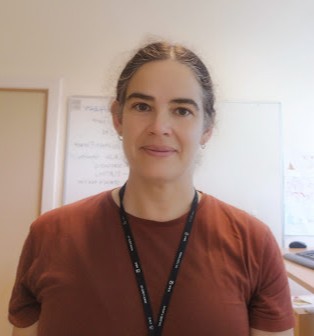

Clara Antón Fernández
| AREA | RESEARCH INSTITUTE | |
|---|---|---|
| Forest Modelling | iuFOR – University Institute for Research in Sustainable Forest Management |
My research career focuses on forest modelling and the development of tools to support large-scale forest planning. I trained in the United States, where I obtained a PhD in Forest Sciences from Michigan Technological University and subsequently completed a postdoctoral fellowship at Virginia Tech, specialising in forest biometrics and growth simulation.
In 2010, I joined the Norwegian Institute of Bioeconomy Research (NIBIO), where I conducted research for almost fifteen years. There, I led the design and implementation of models and simulators to project the development of Norwegian forests under different management and policy scenarios. My contributions include a felling probability model used in national scenarios since 2012 and the SiTree individual simulator, which has been the main growth and yield tool in Norway for almost a decade. I have also co-designed the simulator that underpins the projections of the national forest resource map and contributed to the calculation of the reference level for Norway's National Forest Accounting Plan.
My research combines detailed forest inventory data, forest dynamics models and simulation approaches to generate robust and transparent scenarios. I have worked at both stand and regional and national scales, with a special interest in linking growth modelling to strategic decision-making in forest policy.
In February 2025, I joined the University of Valladolid as Beatriz Galindo Senior Distinguished Professor, with the aim of contributing to capacity building in forest modelling, simulation and planning in Castile and León. I am currently working on the construction of decision support systems, integrating data from the National Forest Inventory, new sources of information and advanced forest simulators to analyse scenarios of sustainable management, climate change and large-scale territorial planning.
My research focuses on developing models and tools that enable us to understand and project large-scale forest dynamics. I work mainly with empirical models based on national forest inventory data and spatial information, integrating them into simulators capable of exploring how forests evolve under different management practices and climatic conditions.
Throughout my career, I have designed models that describe processes such as growth, mortality, site quality and response to management, incorporating them into simulation systems used to evaluate management alternatives and support strategic decisions in forest planning. This approach has been particularly useful in contexts where it is necessary to compare complex scenarios, assess trade-offs and provide clear results for administrations and managers.
My goal is to develop robust, practical, evidence-based tools that enable sustainable planning at the regional and national levels amid growing uncertainty. Overall, my research seeks to combine rigorous modelling with real-world applicability to facilitate informed, efficient forest management that is adapted to current challenges.
My vision is to bring scientific knowledge closer to forest management through tools that are rigorous and useful for decision-makers. I seek to use models and simulations to help managers and policymakers evaluate options clearly, integrating only what is relevant to each problem. Not all questions require the same level of detail: each analysis needs a simulation tailored to its scale and purpose. Therefore, my approach focuses on adjusting empirical and robust models, avoiding unnecessary complexities and providing transparent and comparable results that support informed and sustainable planning on a large scale.