
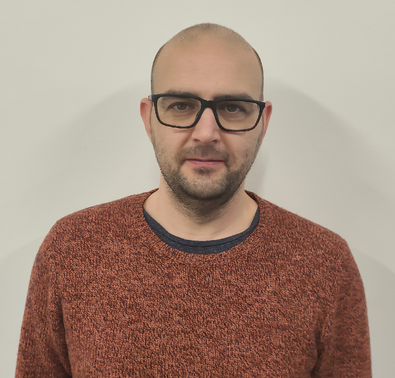

Omar Motiño García-Miguel
| AREA | RESEARCH GROUP | INSTITUTE | |
|---|---|---|---|
| Cellular and Molecular Physiology | Cellular Stress and Immunosurveillance | Institute of Biomedicine and Molecular Genetics of Valladolid |
I hold a Bachelor's Degree in Biology from the University of Alcalá de Henares (2010) and a PhD in Molecular Biosciences from the Autonomous University of Madrid (2016). During my predoctoral studies, I worked as an FPI researcher in Dr. Paloma Martín-Sanz's laboratory at the Sols-Morreale Institute for Biomedical Research (CSIC), where I specialized in the study of cyclooxygenase-2 (COX-2) in chronic hepatic pathophysiology. In my first year, I researched the post-transcriptional regulation of COX-2 by microRNAs in hepatocellular carcinoma, delving into the mechanisms that promote tumor progression. I then expanded my work to include non-alcoholic fatty liver disease and insulin resistance, analyzing the interaction between inflammation, metabolism, and liver damage.
In 2014, I did a short stay at Dr. Myriam Gorospe's laboratory at the NIA-NIH (Baltimore, USA), where I studied microRNA expression profiles in the context of caloric restriction and obesity, which enriched my training in post-transcriptional regulation and metabolism.
After obtaining my PhD, in 2016 I began my postdoctoral research investigating the role of COX-2 in liver damage caused by ischemia/reperfusion. In 2019, under the supervision of Prof. Guido Kroemer at the Centre Recherche des Cordeliers-INSERM (Paris, France), I focused my research on identifying new therapeutic strategies based on the pharmacological induction of autophagy in different organs, especially in the liver. This period allowed me to integrate concepts of cellular stress, programmed cell death, and tissue regeneration.
In 2023, I joined the University of Valladolid as a Beatriz Galindo Junior Distinguished Researcher in the Cellular Stress and Immunovigilance group, led by Dr. Laura Senovilla. Since then, I have been developing my own line of research focused on the search for new therapeutic strategies for human hepatobiliary diseases.
My research focuses on understanding how autophagy, cellular stress, cell death, and immunity mechanisms determine the pathophysiology of hepatobiliary diseases. My goal is to translate this molecular knowledge into new therapeutic strategies and biomarkers that enable early diagnosis and stratification of liver and biliary tract diseases.
More specifically, my current lines of research focus on:
- Identifying and functionally validating activators of responses to oxidative and inflammatory stress as potential interventions to reverse the metabolic dysfunction associated with fatty liver and slow its progression to advanced stages, including liver cancer.
- Pharmacologically modulating autophagy and cell death pathways to define their contribution to the onset and progression of liver cancer, and evaluating their relevance as therapeutic targets.
- Characterize the immunovigilance circuits that sustain hepatobiliary health, examining how the interaction between the immune response and cellular stress control conditions the onset, progression, and chronicity of liver diseases.
Thanks to strategic collaborations with Río Hortega Hospital and Mayo Clinic, we are translating these findings into translational studies on samples from patients with hepatobiliary diseases, reinforcing the clinical applicability of the research.
My long-term vision is that these lines will contribute to the design of innovative therapeutic interventions for human hepatobiliary diseases, both in acute and chronic settings, including those associated with aging.