
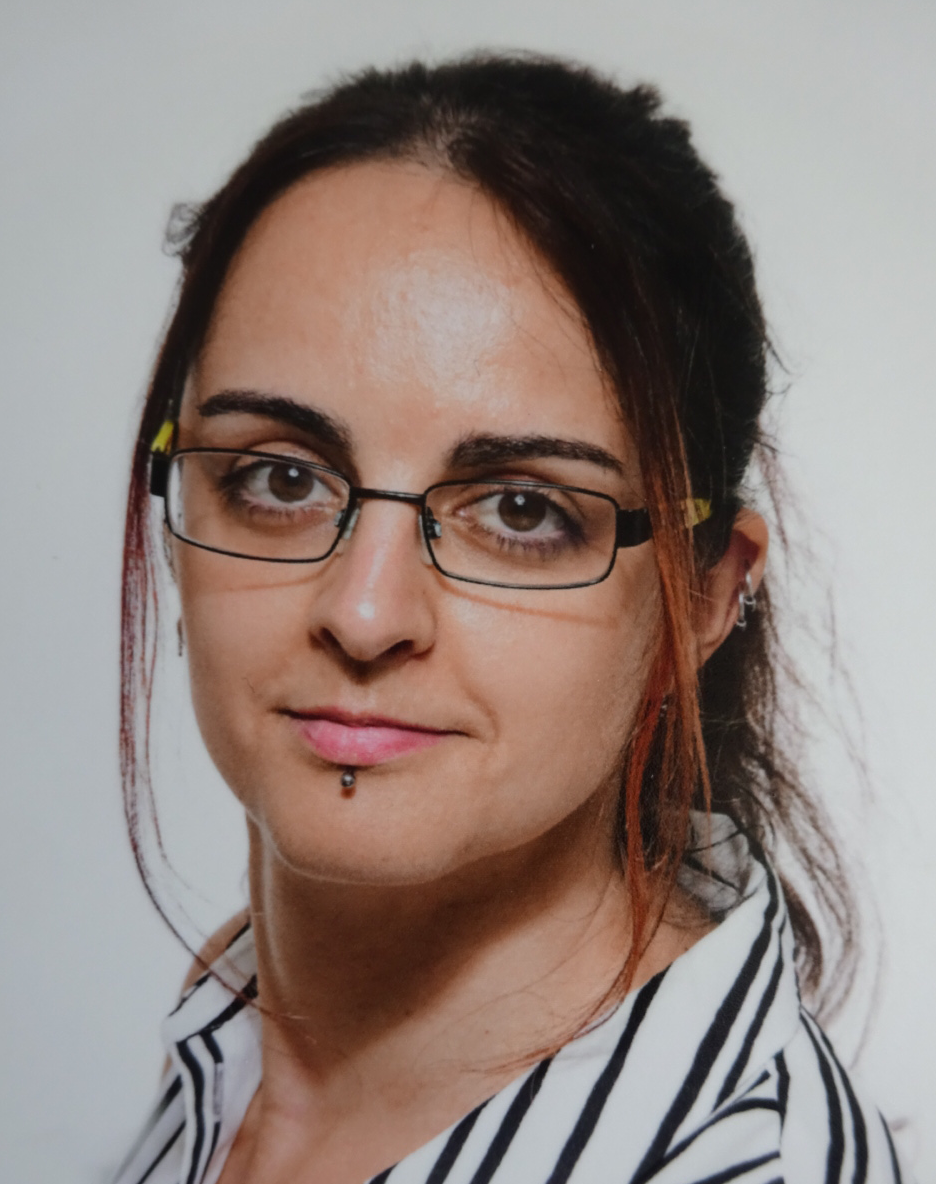

Celia Escudero Hernández
| AREA | RESEARCH GROUP | |
|---|---|---|
| Immunology | Intestinal Physiopathology Laboratory |
After graduating with a degree in Biotechnology (University of León, first graduating class in 2009), I obtained my master's degree and PhD in Biomedical Research from the University of Valladolid. After defending my international doctoral thesis on immunogenetics of coeliac disease (November 2015, Extraordinary Award), I continued as a postdoc, first at the Mucosal Immunology Laboratory where I obtained my doctorate, and then at Linköping University, Sweden (2017-2020), where I specialised in the pathogenesis of microscopic colitis, a moderate inflammatory bowel disease (IBD) that causes watery diarrhoea, significantly reducing patients' quality of life.
Between 2020 and 2025, I conducted my independent research at the University Hospital of Schleswig-Holstein in Kiel, Germany, under the supervision of Professor Philip Rosenstiel. I obtained funding as principal investigator (PI, €125,000) from Kiel Life Science, the European Microscopic Colitis Group (EMCG) and the European Crohn's and Colitis Organisation (ECCO), which allowed me to continue my line of research into microscopic colitis and implement a new one into intestinal fibrosis, an untreatable complication of the most severe IBDs (Crohn's disease and ulcerative colitis).
With a recruitment grant from ECCO, I returned to Spain in April 2025 as a visiting researcher at Prof. David Bernardo's laboratory (CSIC–UVa). Finally, in November 2025, I joined the University of Valladolid with the help of the senior ‘Beatriz Galindo’ talent attraction grant from the Ministry of Science, Innovation and Universities, with which I am establishing my independent laboratory in Intestinal Physiopathology.
In the coming years, I will continue to investigate the molecular and cellular mechanisms of all forms of IBD using massive sequencing, immunomics, and in vitro organ modelling techniques in collaboration with the Mucosal Immunology Laboratory and the Clínico and Río Hortega University Hospitals in Valladolid, among others.
I focus on exploring the molecular and cellular mechanisms underlying inflammatory bowel diseases (IBD), including moderate forms of microscopic colitis, and extending to untreatable complications such as intestinal fibrosis. In addition to focusing on the immune response, I analyse the changes that occur in the intestinal epithelium (increased permeability, water and ion transport dysfunction, alterations in intercellular junctions) and in fibroblasts, cells that support tissue and promote its maintenance, repair and healing. To do this, I combine high-throughput techniques such as sequencing (RNA-seq) and immunomics (spectral cytometry with >40 markers) with microscopy (confocal and laser microdissection) and cell cultures that allow me to simulate the intestine in vitro (cell lines, primary human blood and tissue cells, and ‘organ-on-a-chip’ cultures). I currently collaborate with basic, translational and clinical researchers in Spain, Sweden, Germany, Belgium, Italy and Lithuania. Among the scientific groups to which I belong, the European Microscopic Colitis Group (EMCG: I coordinate the biobank network), the European Crohn's and Colitis Organisation (ECCO: I am a member of the working group on microscopic colitis), the Spanish Working Group on Crohn's Disease and Ulcerative Colitis (GETECCU: I coordinate the group of basic researchers), and the European Union of Gastroenterology (UEG: I am junior editor of its Q1 journal). Thanks to them, and especially to the Young Investigator Award that ECCO granted me in 2025, I have positioned myself as a European leader in the pathogenesis of microscopic colitis.
My goal is to identify new pathophysiological mechanisms of IBD that can help me establish new biomarkers for the disease and enable earlier diagnosis, as well as find therapeutic targets to develop more effective and personalised treatments. I try to raise awareness of microscopic colitis because, as it is not as severe as Crohn's disease and ulcerative colitis, it is rarely studied despite its estimated incidence being equal to or greater than that of more severe IBD.
With the ‘Beatriz Galindo’ contract of excellence that brought me to the University of Valladolid, I seek to consolidate an internationally competitive research group that integrates translational approaches, fosters multicentre collaborations, and trains the next generation of intestinal immunologists and pathophysiologists.