
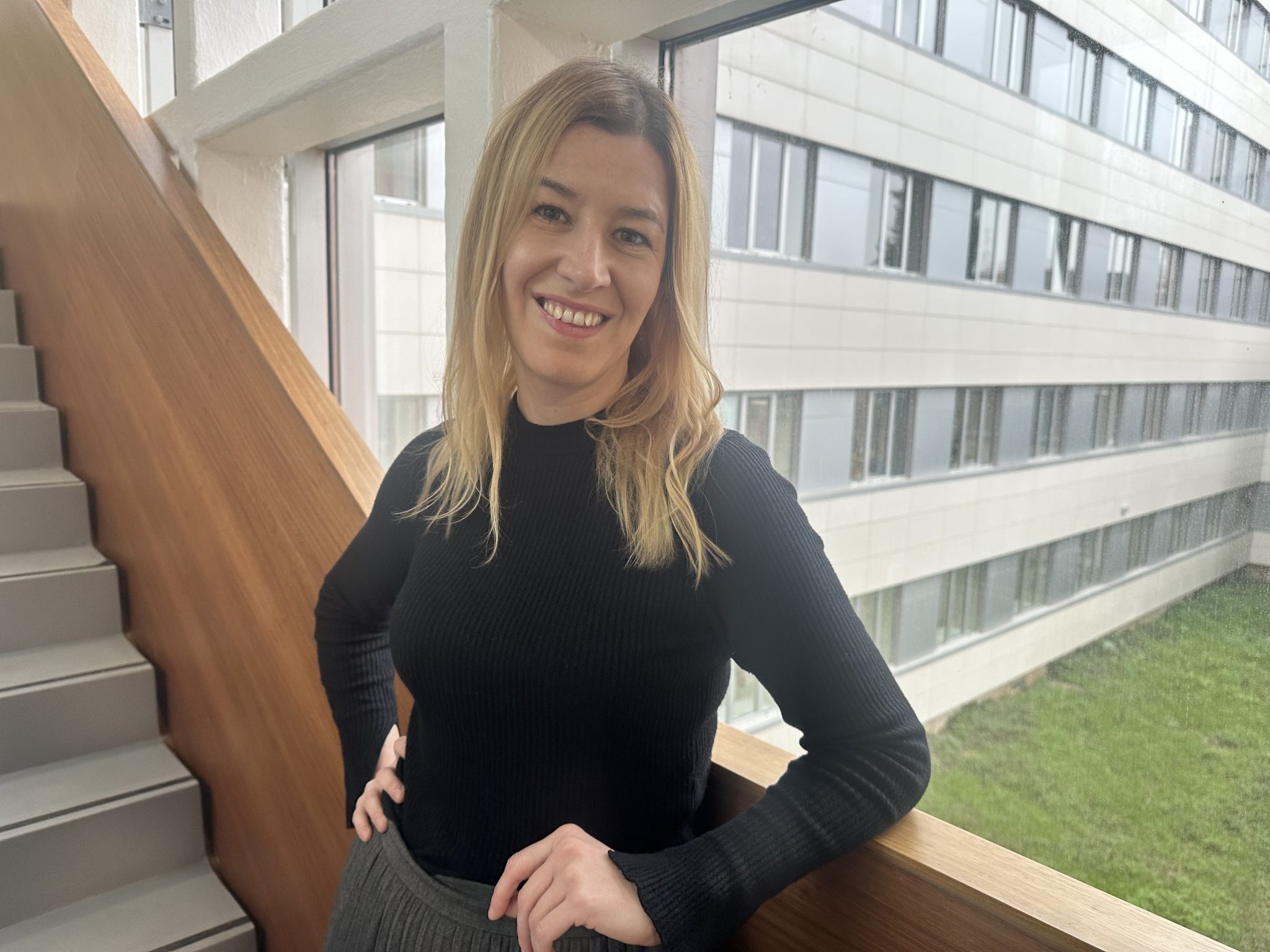

Sara Cantera Ruiz de Pellón
| AREA | RESEARCH GROUP | INSTITUTE | |
|---|---|---|---|
| Chemical Engineering | Environmental Technology | Institute for Sustainable Processes (ISP) |
I graduated in Biology from the Autonomous University of Madrid, where I also completed a Master's degree in Molecular Biology (2011) and a Master's degree in Environmental Microbiology (2012). In 2012, I began working with environmental engineering groups (University of Cantabria and University of Valladolid), as my greatest aspiration has always been to conduct fundamental research with a strong applied basis that can be used to solve real environmental problems. For this reason, I developed my doctoral thesis in the Environmental Engineering group at the University of Valladolid (2014-2018), where I specialised in bioprocess engineering. During my thesis, I began pioneering research into the transformation of the greenhouse gas (GHG) methane into pharmaceutical substances with high market value, for which I received the Royal Academy of Doctors' award for the Best Doctoral Thesis in Experimental Sciences in Spain (RAED, 2019).
I began my postdoctoral studies in the microbiology laboratory at Cornell University (USA) with a postdoctoral fellowship from the IMFAHE excellence programme (IMP-IMFAHE excellent grant, 2018). There, I specialised in the use of bioinformatics techniques for the study of microbial populations.
In 2019-2020, I worked as a postdoctoral researcher in the microbial physiology group at Wageningen University (Netherlands) with the SIAM Talent Grant and Ramon Areces postdoctoral fellowships. During this period, I specialised in the development of multi-omic techniques to discover new metabolic pathways involved in the biotransformation of GHGs.
In 2020 and 2021, I was awarded the European Commission's MSCA-IF 2019 individual project and two projects from the Netherlands Organisation for Scientific Research (NWO-XS), which allowed me to develop my own line of research at Wageningen University based on the transformation of GHIs into pharmaceutical substances.
In 2022, I was named one of the Spanish scientists recognised and highlighted by the FECYT and was awarded the María Zambrano 2021 research contract for attracting international talent at the University of Valladolid.
My research combines the development of new biotechnological alternatives and the use of new extremophile microorganisms in order to transform the most abundant greenhouse gases, carbon dioxide (CO₂) and methane (CH₄), into substances of high social and economic value. This process has hardly been addressed in biotechnology and is necessary to make a circular, climate-neutral and renewable bioeconomy viable that is capable of meeting all current needs.
In this sense, my line of research is pioneering in discovering and implementing new biological platforms and unexplored metabolisms that allow these gases to be transformed into valuable substances, mainly drugs and cosmetics.
To this end, I adopt an interdisciplinary approach that combines four different perspectives:
From a molecular point of view, I carry out metagenomic searches that allow me to find new, previously unexplored organisms that have the genetic potential to produce compounds of interest to the pharmaceutical and cosmetics industries.
From a biotechnological point of view, I validate these novel microorganisms in the laboratory and optimise the culture conditions to ensure better yields.
From a chemical point of view, I identify new natural compounds generated in extreme environments that are of interest to the pharmaceutical and cosmetics industries.
Finally, from a chemical engineering point of view, I design and operate advanced bioreactors that increase biotransformation and, therefore, the elimination of GHGs and the productivity of the drugs and cosmetics obtained.
My vision is to position myself as one of the leading scientists in the development of new microbiological bioprocesses that promote the sustainability and circularity of pharmaceutical and medical advances.